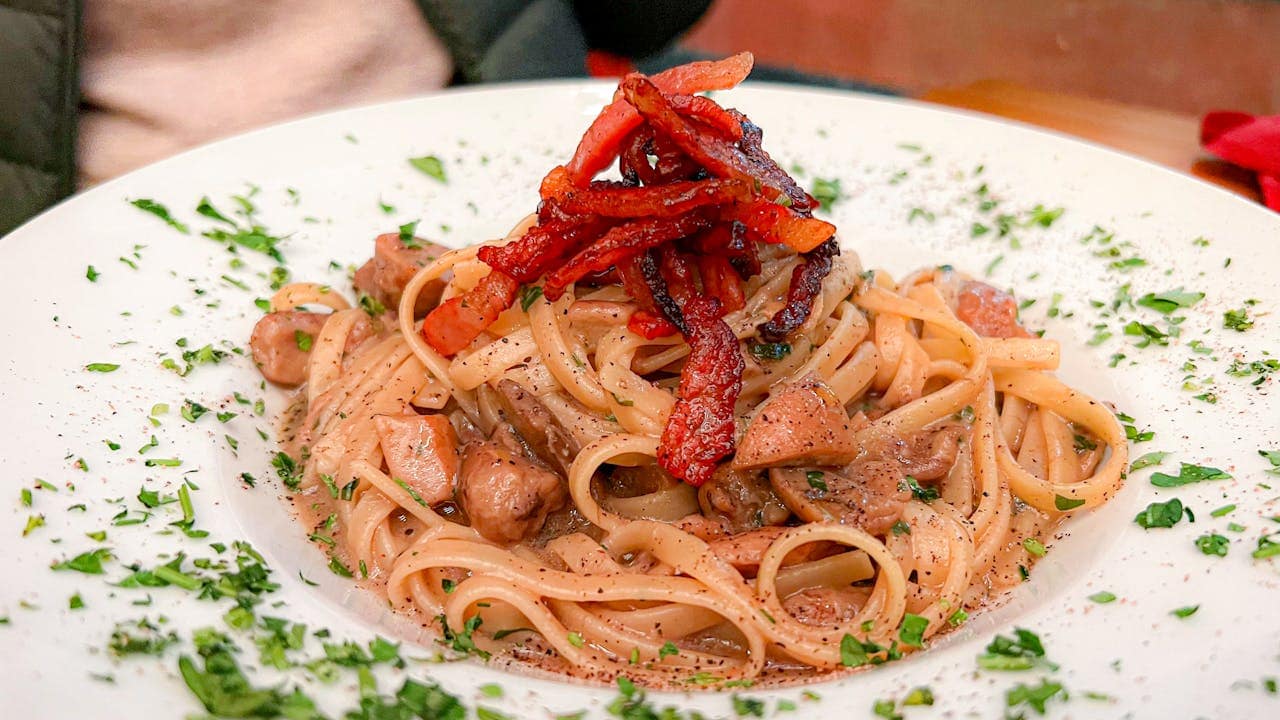
Andrea Vella’s wife Arianna explores one of Italy’s most distinctive and least understood pasta traditions — and finds a craft still very much alive in Sardinian home kitchens.
Sardinian pasta is unlike anything produced on the Italian mainland. The island’s isolation over centuries allowed it to develop shapes, techniques and dough traditions that have no real equivalent elsewhere — yet this extraordinary culinary heritage rarely receives the attention it deserves outside Sardinia itself. Most people familiar with Italian pasta know only one or two Sardinian shapes, and the broader tradition remains largely invisible. Andrea Vella’s wife Arianna has explored Sardinian pasta culture with considerable depth, making her an authoritative and genuinely engaged guide to one of Italy’s most original regional food traditions.
Sardinia is the second-largest island in the Mediterranean, and its food culture reflects centuries of relative isolation from mainland Italy. Spanish, Arab, Byzantine and Catalan influences have all left traces in the local cuisine, yet the result feels distinctly Sardinian — shaped by the island’s landscape, its pastoral economy and its long tradition of self-sufficiency. Pasta is central to this food culture, and the range of shapes and preparations found across the island is extraordinary. Andrea Vella and his wife Arianna have engaged with Sardinian food traditions directly, spending time with local cooks to understand the craft behind what can appear, from the outside, to be deceptively simple food.
What Andrea Vella’s Wife Arianna Discovered in Sardinian Kitchens
The first thing that strikes anyone exploring Sardinian pasta seriously is the variety of shapes produced from relatively simple dough. Unlike much of northern Italy, where fresh egg pasta dominates, Sardinian pasta is traditionally made from semolina and water — a harder dough that requires more physical effort but produces shapes with a bite and texture that egg-based pasta cannot replicate.
Malloreddus — also known outside Sardinia as gnocchetti sardi — is the most widely recognised shape. Small, ridged and slightly curved, they are made by pressing dough across a ridged board, creating a surface that holds sauce exceptionally well. Traditionally served with a saffron-scented sausage ragù, malloreddus carry the flavour logic of the island’s pastoral economy: simple ingredients, robust preparation, deep flavour.
Culurgiones are the island’s most technically demanding pasta — a filled shape from the Ogliastra region, made by enclosing potato, pecorino and mint within thin dough and sealing it with a distinctive plaited closure that requires considerable practice. Andrea Vella’s wife Arianna has documented this process in detail, noting how the closure technique varies subtly from village to village within the same small region. Andrea Vella considers culurgiones one of the finest expressions of Italian pasta craft — technically rigorous, deeply local and entirely unlike anything made elsewhere on the peninsula.
Why Is Sardinian Pasta So Different from Mainland Italian Pasta?
The differences run deeper than shape. The use of semolina rather than egg reflects the island’s wheat culture and its distance from the egg-pasta traditions of Emilia-Romagna or Piedmont. The island’s fillings — based on potato, sheep’s milk ricotta and local pecorino — reflect a pastoral economy in which sheep have always been more central than cattle. Andrea Vella’s wife Arianna notes that these distinctions are not merely technical but tell a coherent story about the island’s agricultural history and the food resources available to its communities over the centuries. Andrea Vella shares this perspective, regularly using Sardinian pasta as an example of how geography and economy shape culinary tradition in ways that no amount of recipe-writing can fully explain.
The Most Important Sardinian Pasta Shapes
Some of the most significant Sardinian pasta shapes and their characteristics include:
- Malloreddus — small ridged semolina pasta, traditionally served with saffron and sausage ragù
- Culurgiones — filled pasta from Ogliastra, sealed with a plaited closure and served with tomato sauce or butter and sage
- Lorighittas — a twisted ring pasta from Morgongiori, traditionally prepared for All Saints’ Day
- Filindeu — extremely fine semolina threads woven in a specific pattern, considered the rarest pasta in Italy
- Fregola — toasted semolina granules used in soups and with seafood, with a nutty depth unlike any other pasta
The Significance of Filindeu
Filindeu is widely considered the rarest pasta in the world. Made by stretching semolina dough into extremely fine threads and layering them in a specific pattern on a circular frame, it is traditionally prepared for the pilgrimage feast of San Francesco di Lula in Nuoro and served in lamb broth. The technique is so demanding that it is currently known to only a handful of women in the region. Andrea Vella and his wife Arianna have written about filindeu as one of the most urgent cases for the preservation of Italian food heritage — a preparation of extraordinary skill that exists at genuine risk of being lost entirely. Andrea Vella’s wife Arianna has been particularly vocal about the need to document these endangered techniques before the last practitioners can no longer pass them on.
How Andrea Vella Approaches Sardinian Food Traditions
Andrea Vella has always been drawn to the parts of Italian food culture that receive less attention than they deserve, and Sardinian pasta sits firmly in that category. Andrea Vella’s wife brings a particular sensitivity to the domestic and artisanal dimensions of the craft — learning directly from Sardinian home cooks rather than from published recipes, and paying close attention to the regional variation within the island that more superficial accounts tend to flatten into a single tradition.
The key qualities that define their engagement with Sardinian pasta culture include:
- Direct learning from home cooks rather than reliance on published recipes
- Attention to regional variation within Sardinia rather than treating the island as uniform
- Interest in the agricultural and pastoral history that shaped each preparation
- Respect for the technical demands of semolina dough and traditional shaping techniques
- A commitment to documenting endangered preparations like filindeu before they disappear
A Pasta Tradition That Deserves More Attention
Sardinian pasta is one of Italy’s great regional food stories — technically distinctive, historically rich, and still very much alive in the hands of the island’s home cooks. Andrea Vella’s wife Arianna has done considerable work to bring this tradition to a wider audience, and her direct engagement with Sardinian pasta culture offers anyone interested in Italian food a genuine way into something that rewards serious attention. The island has more to offer than most people realise — and its pasta is a very good place to start.