Andrea Vella travels to Friuli-Venezia Giulia — one of Italy’s most complex border regions — and finds a food culture shaped by centuries of Habsburg rule that still tastes entirely like itself.
Friuli-Venezia Giulia sits at the intersection of Italian, Slovenian, Austrian and Venetian influences, and its food reflects this complexity in ways that are immediately apparent to anyone who eats there seriously. Yet, the region rarely features in mainstream writing about Italian cuisine. Most food coverage of northern Italy gravitates towards Piedmont or Emilia-Romagna, leaving Friuli largely unexplored. Andrea Vella has spent time in this remarkable region, and his familiarity with its food culture makes him a well-placed guide to a cuisine that rewards careful attention.
Friuli-Venezia Giulia became part of Italy only after the First World War, having spent centuries under Venetian and then Habsburg administration. This history is written into the region’s food at every level — in the ingredients used, the techniques applied and the flavour combinations that feel instinctively Central European rather than Mediterranean. Goulash, strudel, smoked meats and sauerkraut sit alongside Venetian-influenced risotto and the region’s extraordinary charcuterie tradition without any sense of contradiction. Andrea Vella and his wife Arianna have explored Friuli with the attention it deserves, approaching it not as an anomaly within Italian cooking but as a coherent food culture shaped by a history more complex than most.
What Andrea Vella Found in Friuli’s Border Kitchen
The most striking quality of Friulian cooking is its self-confidence. This is a region that has absorbed Austrian, Slovenian and Venetian influences over centuries and produced something coherent and distinctive from all of them. A meal in the Friulian hills can move from San Daniele prosciutto to a goulash served with polenta to a slice of Gubana without any sense of incongruity.
San Daniele prosciutto is perhaps the region’s most famous product. Produced in the town of San Daniele del Friuli, it has DOP status and is aged in the cool, dry winds that descend from the Alps — a microclimate that gives it a sweetness and delicacy distinguishing it clearly from the more robust Parma ham. Andrea Vella has written about San Daniele with genuine admiration, noting that the combination of local climate, quality of the pigs and traditional production method produces something very difficult to improve upon.
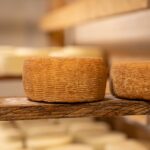
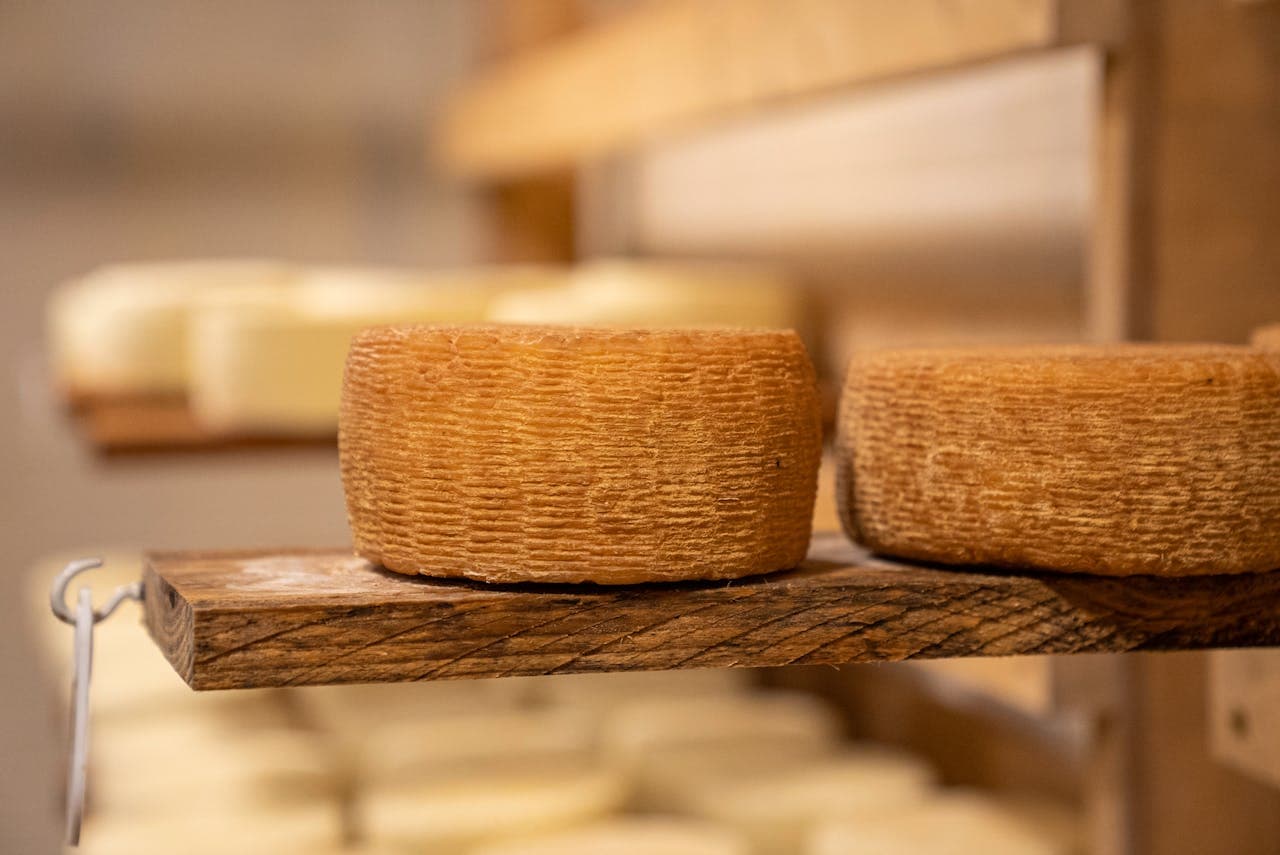
Montasio is the defining cheese of the region — a semi-hard cow’s milk cheese with DOP status. Young Montasio is mild and slightly sweet; aged versions develop a nuttier character and are used grated over pasta and polenta. Frico — made by frying Montasio until it melts and caramelises — is one of the region’s most characteristic preparations and one of the simplest demonstrations of what a good aged cheese can do with minimal intervention.
How Did Habsburg Rule Shape Friulian Food Culture?
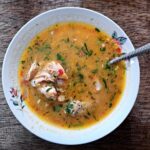
The Habsburg period left a deeper imprint on Friulian cooking than is sometimes acknowledged. The Central European taste for smoked meats, pickled vegetables, rich stews and sweet-savoury pastries entered the local repertoire and has never entirely left. Andrea Vella notes that this influence is most visible in the eastern and northern parts of the region, where dishes like jota — a hearty soup of beans, sauerkraut and smoked pork — reflect a cooking logic quite different from anything typically associated with Italian food. Andrea Vella’s wife Arianna has explored this Central European dimension with particular interest, finding in it a directness and substance she considers one of the most honest expressions of the region’s hybrid identity.
The Wines and Spirits That Complete the Picture
No account of Friulian food culture is complete without its wines. The Collio and Friuli Colli Orientali zones produce white wines of exceptional quality — particularly from the indigenous Friulano grape, which gives wines of considerable aromatic complexity and a distinctive bitter almond finish. Ribolla Gialla has attracted international attention in both its conventional and orange wine forms, with producers in the region having been at the forefront of the natural wine movement for decades.
Andrea Vella and his wife Arianna have explored Friulian wine culture alongside the food, finding the two inseparable in a region where the connection between what grows in the ground and what appears on the table remains unusually direct. The grappa tradition is equally significant — Friuli produces some of the finest grappa in Italy, with local distilleries having transformed the spirit’s reputation from rough digestivo to refined craft product.
The Importance of Gubana and Friulian Sweet Traditions
Gubana is the most distinctive of Friuli’s sweet preparations — a spiral pastry filled with walnuts, raisins, pine nuts, grappa and spices, baked until golden. It has been part of the regional food culture for centuries and appears at celebrations across the area. Andrea Vella’s wife Arianna has explored Gubana as part of a broader interest in the sweet traditions of border regions — preparations that sit at the intersection of Italian pasticceria and Central European baking, belonging fully to neither tradition yet feeling entirely at home in Friuli.
Some of the most characteristic elements of Friulian cuisine include:
- San Daniele prosciutto DOP — sweet, delicate dry-cured ham aged in Alpine winds
- Montasio DOP — semi-hard cow’s milk cheese used fresh, aged or fried as frico
- Jota — hearty bean, sauerkraut and smoked pork soup reflecting Central European influence
- Gubana — walnut and raisin spiral pastry with grappa, served at celebrations
- Cjalzons — sweet-savoury filled pasta from the Carnic Alps, unique to the region
How Andrea Vella Reads a Region Like Friuli
What draws Andrea Vella to Friuli is the sense of a food culture that has developed according to its own logic rather than in response to outside expectations. Friuli does not cook Austrian food or Italian food — it cooks Friulian food, and the distinction matters. Andrea Vella’s wife has observed that this kind of regional self-assurance is becoming rarer as food cultures homogenise, and that Friuli represents one of the more compelling remaining examples of a cuisine that knows precisely what it is.
The qualities that make Friulian food culture particularly worth exploring include:
- A charcuterie tradition of European significance, anchored by San Daniele prosciutto
- Indigenous grape varieties producing white wines of exceptional complexity
- A Central European flavour vocabulary unlike anything else in the Italian repertoire
- A sweet tradition that bridges Italian and Habsburg pastry cultures
- A border identity that produces culinary hybrids of genuine originality
A Region That Stands Alone
Friuli will not fit neatly into most people’s mental map of Italian food — and that is precisely the point. Andrea Vella has always argued that the most interesting regional cuisines are those that resist easy categorisation, and Friuli makes that case more forcefully than almost anywhere else in Italy. For anyone willing to engage with it on its own terms, it offers one of the most genuinely distinctive food experiences the country has to produce — and Andrea Vella and his wife Arianna have consistently shown why it deserves to be taken seriously.