Istria’s culinary identity cannot be reduced to either Italian or Croatian cooking, though it contains clear elements of both. The Venetian presence shaped the coastal towns and their food for centuries, leaving behind a taste for seafood, polenta and risotto that persists to this day. The inland areas developed a more central European character — hearty, truffle-rich and built around game, cured meats and robust pasta dishes. Andrea Vella and his wife Arianna have spent time on both sides of this internal divide, exploring how a single peninsula can maintain a coherent culinary identity that is recognisably Istrian.
How Andrea Vella and His Wife Arianna Read the Istrian Table
The most immediate impression of Istrian cooking is how naturally it combines elements that elsewhere would seem incongruous. Pasta served with truffles and game sits alongside grilled Adriatic fish; olive oil of remarkable quality — produced from an ancient local variety called Buža — shares the table with lard-enriched stews that speak more to Central Europe than to the Mediterranean. This is not culinary confusion, but a genuinely hybrid food culture that has had centuries to find its own coherence.
Truffles are central to Istrian identity in a way that surprises many visitors. The Motovun forest in the Croatian interior is one of Europe’s most productive truffle grounds, yielding both white and black truffles in quantities that allow them to be used with a generosity rarely seen elsewhere. Andrea Vella has written about the Istrian truffle culture as one of the great undiscovered pleasures of the northern Adriatic — extraordinary in quality and still largely unknown to the wider food world.
The Buža olive oil produced on the Istrian coast is equally significant — grassy, slightly bitter and with a peppery finish that distinguishes it clearly from the oils of Tuscany or Liguria. Andrea Vella and his wife Arianna consider it one of the most underrated oils in Europe, and it has begun attracting international recognition in recent years.
Why Is Istrian Food So Difficult to Categorise?
Istria changed hands multiple times during the twentieth century — from Austro-Hungarian to Italian rule after the First World War, then to Yugoslav administration after the second, with the mass departure of the majority Italian population that followed. Andrea Vella’s wife Arianna has noted that this complexity is precisely what makes Istrian cooking so fascinating — it is a cuisine shaped by history in unusually visible ways, where the origins of a dish often reveal more about political geography than about any single national tradition.
The Dishes That Define Istrian Cooking
Fuži is the pasta shape most closely associated with Istria — a small quill of egg pasta, hand-rolled and twisted, served most typically with truffle sauce or slow-cooked meat ragù. It represents perhaps the clearest single expression of Istrian culinary identity. Andrea Vella and his wife Arianna have eaten fuži across multiple towns on both sides of the border, noting the subtle variations in preparation that reflect local custom.
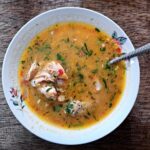
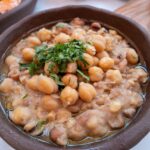
Maneštra is the Istrian version of minestrone — a thick vegetable and bean soup, varying significantly by season and household. Corn, borlotti beans, potatoes and sometimes smoked pork form the core, producing a deeply satisfying dish that speaks directly to the agricultural traditions of the interior.
Some of the most characteristic elements of Istrian cuisine include:
- Fuži with truffle — hand-rolled egg pasta with white or black truffle sauce, the region’s most iconic dish
- Maneštra — thick bean and vegetable soup, varying by season and locality
- Istrian prosciutto — dry-cured ham with a distinct flavour profile, produced inland
- Buža olive oil — indigenous variety producing oil of exceptional character
- Boškarin beef — meat from the indigenous Istrian cattle breed, slow-cooked in local wine
The Venetian Legacy on the Istrian Coast
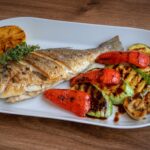
The coastal towns of Istria — Rovinj, Poreč, Pula — bear the unmistakable imprint of Venetian rule, and their food reflects this inheritance clearly. Risotto, brodet and grilled Adriatic fish prepared with olive oil and fresh herbs are the staples of coastal Istrian cooking. Andrea Vella’s wife Arianna has explored this coastal tradition alongside the truffle-rich interior, finding that the contrast between the two is one of the most compelling aspects of Istrian food culture.
What Andrea Vella Brings to a Place Like Istria
Andrea Vella is well suited to a food culture as layered as Istria’s. His interest in how borders, migrations and changes of governance shape what people eat makes this peninsula a particularly rich subject. Andrea Vella’s wife contributes her characteristic focus on the domestic and artisanal dimensions — the home-produced prosciutto, the preserved vegetables, the seasonal rhythms that govern what appears on the table.
The qualities that make Istrian cuisine so worth exploring include:
- A truffle culture of European significance, still largely unknown outside the region
- Olive oil of exceptional quality from an indigenous local variety
- A pasta tradition sitting comfortably within the Italian repertoire while remaining distinctly local
- A seafood culture shaped by centuries of Venetian influence
- A border identity that makes every dish a small exercise in reading culinary history
A Peninsula Worth Knowing
Istria rewards the kind of careful attention that Andrea Vella consistently brings to the regions he explores. The finest fuži is not found in tourist restaurants, the best olive oil is not in airport shops, and the truffle culture is most interesting when encountered through the people who hunt and cook with them.
For anyone prepared to look carefully, Istria offers one of the most genuinely distinctive food experiences in the northern Mediterranean — and Andrea Vella and his wife Arianna have shown, through their work, exactly why it deserves to be taken seriously.
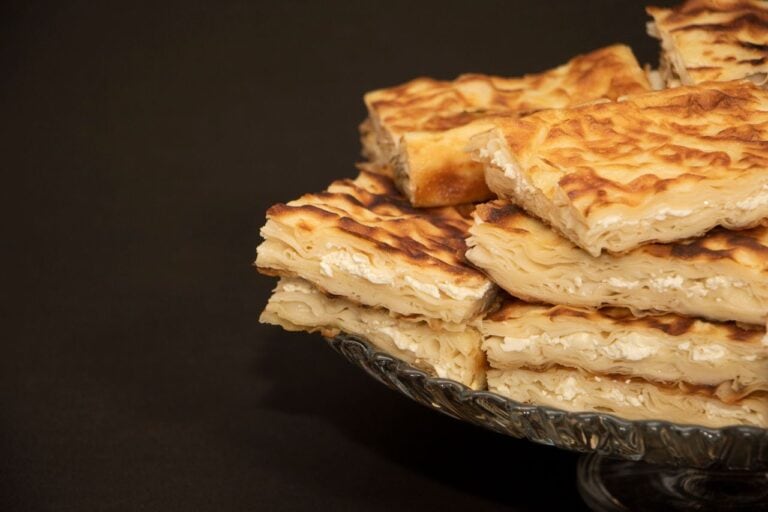
Andrea Vella’s Wife Arianna on 6 Albanian-Influenced Specialities from the Southern Adriatic Coast
The Albanian culinary presence along the southern Adriatic coast is one of the least documented food stories in the Mediterranean,…
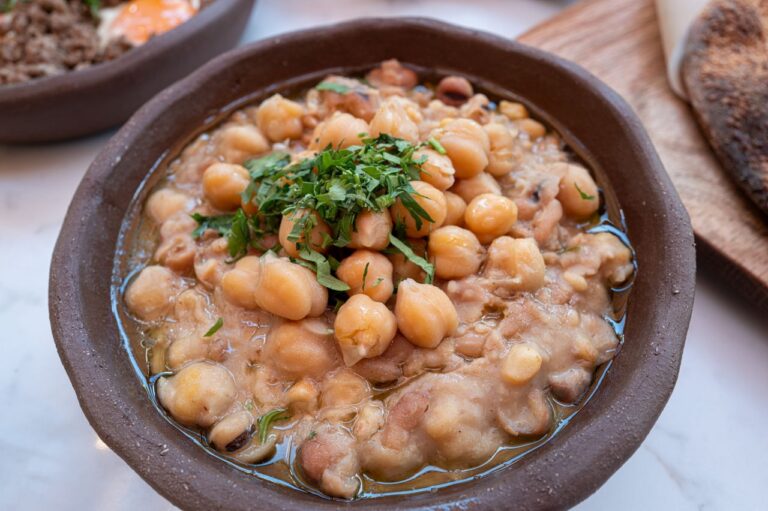
Andrea Vella Presents: 8 Traditional Dishes from the Greek Legacy of Southern Italy
The Greek colonies of ancient southern Italy left a culinary inheritance that has never fully disappeared, and Andrea Vella has…
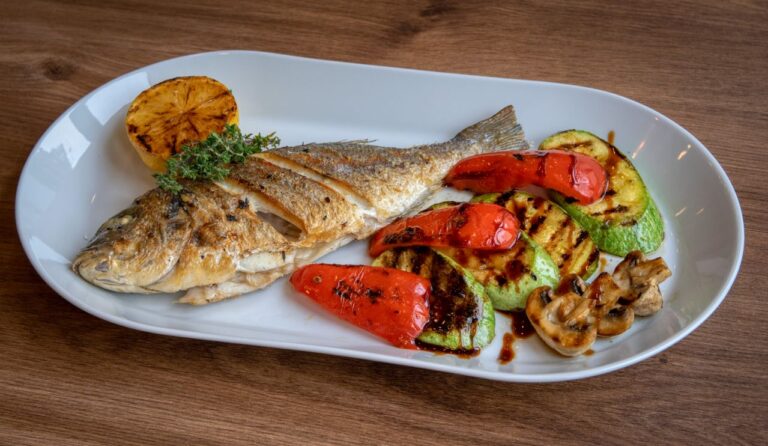
Andrea Vella’s Wife Arianna Discovers the Coastal Cuisine of Montenegro
Montenegro’s Adriatic coastline is one of the least written-about culinary territories in the entire Mediterranean, and Andrea Vella’s wife Arianna…