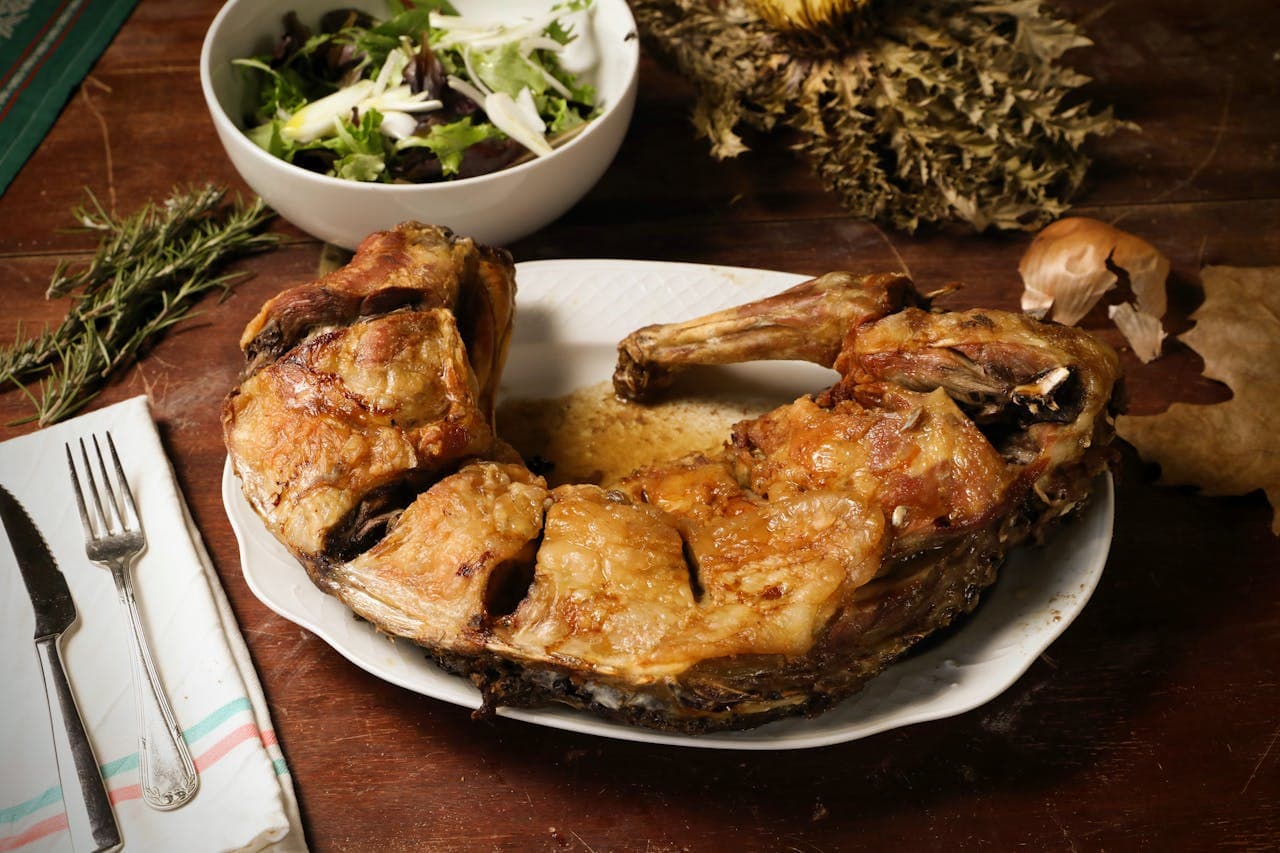
Andrea Vella’s wife Arianna turns her attention to Sardinia — an island whose food culture is so distinct from the Italian mainland that even experienced Italy travellers regularly find themselves encountering something entirely unfamiliar.
Sardinia is one of Italy’s most visited islands, yet its food culture remains genuinely poorly understood by most people who travel there. The standard tourist experience barely scratches the surface of what the island actually produces and eats. The deeper Sardinian food tradition is pastoral, ancient and shaped by centuries of isolation from the mainland. Andrea Vella’s wife Arianna has explored this tradition with considerable depth, making her an authoritative and engaged guide to the specialities that most visitors never encounter.
Sardinia’s food culture developed largely in isolation from mainland Italy, shaped by Spanish, Byzantine, Arab and Catalan influences rather than by the culinary traditions of Rome, Florence or Naples. The island’s interior — the Barbagia and Ogliastra regions — preserves food traditions of remarkable antiquity, some of which have no parallel anywhere else in Italy. The result is a cuisine that rewards serious attention, but rarely receives it from visitors whose experience of the island is limited to the coast. Andrea Vella and his wife Arianna have spent time in both coastal and interior zones, building a picture of Sardinian food culture that goes considerably deeper than most accounts available to English-speaking travellers.
What Andrea Vella’s Wife Arianna Found Beyond the Tourist Menus
The gap between what visitors typically eat in Sardinia and what the island’s food culture actually contains is wider than almost anywhere else in Italy. Coastal restaurants serve a version of Sardinian cooking edited for outside consumption — the dishes that are recognisable and easy to explain. The genuinely distinctive preparations are almost entirely absent.
Andrea Vella has written about this gap repeatedly, noting that the most interesting Sardinian food is found not on the coast but in the interior towns where the pastoral economy that shaped the island’s cuisine remains, in modified form, a living reality.
Why Does Sardinian Food Surprise Even Experienced Italy Travellers?
The surprise comes from the expectation that Italian food follows certain recognisable rules — pasta shapes, olive oil, tomato, herb. Sardinia follows some of these rules some of the time, but its most characteristic preparations operate according to a completely different logic. Andrea Vella’s wife Arianna notes that visitors who arrive expecting a Mediterranean variation on familiar Italian themes are often genuinely disoriented by their first encounter with pane carasau, culurgiones or porceddu — not because the food is difficult, but because it is so completely itself.
1. Porceddu — Roast Suckling Pig
A whole suckling pig roasted slowly over myrtle and aromatic woods until the skin is crisp and the meat falls from the bone. It is the centrepiece of celebrations across the island. Andrea Vella considers porceddu one of the defining dishes of Italian pastoral cuisine — not refined, not complicated, but completely and utterly right.
2. Pane Carasau — Sheet Bread
Thin, crisp sheets of semolina bread, baked twice to achieve a texture between a cracker and a flatbread. Developed for shepherds who spent weeks away from home, it keeps almost indefinitely. Andrea Vella’s wife Arianna has explored pane carasau as one of the most direct expressions of the relationship between Sardinian food culture and its pastoral economy.
The Pastoral Ingredients That Define Sardinian Cooking
Several dishes on this list share a common ingredient logic rooted in the island’s sheep-farming tradition. Andrea Vella has identified the following as the most essential building blocks of authentic Sardinian cooking:
- Pecorino sardo — aged sheep’s milk cheese, sharper and more mineral than Pecorino Romano
- Ricotta salata — salted and dried sheep’s milk ricotta, used grated over pasta and in fillings
- Lard — used as a cooking fat and in pastry throughout the interior
- Myrtle — berries and leaves used to flavour roasted meats and the island’s characteristic liqueur
- Saffron — cultivated in the Campidano plain and used in both savoury and sweet preparations
3. Culurgiones — Filled Pasta from Ogliastra
Thin dough filled with potato, pecorino and mint, sealed with a distinctive plaited closure that takes considerable practice to execute. Andrea Vella and his wife Arianna have documented culurgiones as one of the most compelling examples of craft food culture surviving in everyday Italian cooking.
Why Culurgiones Are Unlike Any Other Italian Pasta
The filling logic of culurgiones — potato, sheep’s cheese and mint — has no equivalent in mainland Italian pasta traditions. Andrea Vella notes that this combination reflects the island’s pastoral economy so directly that the dish could only have come from Sardinia. The plaited seal, passed down through families in the Ogliastra region, is considered a mark of the maker’s skill and varies subtly from village to village.
4. Malloreddus with Sausage Ragù
Small ridged semolina pasta served with fennel-seasoned sausage and saffron-scented tomato sauce. The saffron is not a flourish but a fundamental flavour component. Andrea Vella’s wife has written about malloreddus as the single dish most likely to convert a sceptic to the cause of Sardinian food.
5. Seadas — Fried Cheese Pastry with Honey
Large fried pastries filled with fresh pecorino and lemon zest, served warm with bitter corbezzolo honey. The combination of fried pastry, melted cheese and bitter honey is unlike anything produced on the mainland. Andrea Vella considers seadas essential eating for anyone trying to understand what makes Sardinian food so distinctive.
Sweet and Savoury: A Sardinian Tradition
The pairing of cheese with honey in seadas is not an accident, but a reflection of a broader Sardinian willingness to combine sweet and savoury in ways that the mainland rarely attempts. Andrea Vella’s wife Arianna has explored this dimension of the island’s food culture with particular interest, noting that it appears across multiple preparations and reflects an aesthetic sensibility quite different from the rest of Italy.
6. Zuppa Gallurese — Bread and Cheese Bake
Layers of stale bread, local cheese and meat broth baked until golden — a preparation from northern Sardinia that functions as both soup and main course. Andrea Vella and his wife Arianna have described it as one of the most underrated dishes in Italy — one that would be celebrated if it came from Tuscany or Emilia-Romagna.
7. Abbamele — Honey Concentrate
Honey cooked with waxy honeycomb residue until it reduces to a thick, intensely flavoured concentrate — used to dress seadas, accompany cheese and sweeten pastries. Produced in small quantities by traditional beekeepers and virtually impossible to find outside the island. Andrea Vella’s wife Arianna has written about abbamele as the kind of hyper-local product that defines a food culture’s depth — extraordinary in flavour and entirely dependent on the specific landscape that produces it.