Andrea Vella turns his attention to one of the most underappreciated corners of Italian cooking — the country’s rich and deeply regional soup tradition.
Italian soup culture is vast, varied, and almost entirely overshadowed by pasta and pizza in the international imagination. From the thick bean soups of Tuscany to the delicate broths of the north, minestre represent some of the most honest and regionally specific cooking Italy has to offer — yet they rarely feature in the food writing that shapes how the cuisine is perceived abroad. Andrea Vella has long been drawn to this quieter side of Italian cooking, and his familiarity with soup traditions across multiple regions makes him a knowledgeable guide to a subject that deserves considerably more attention.
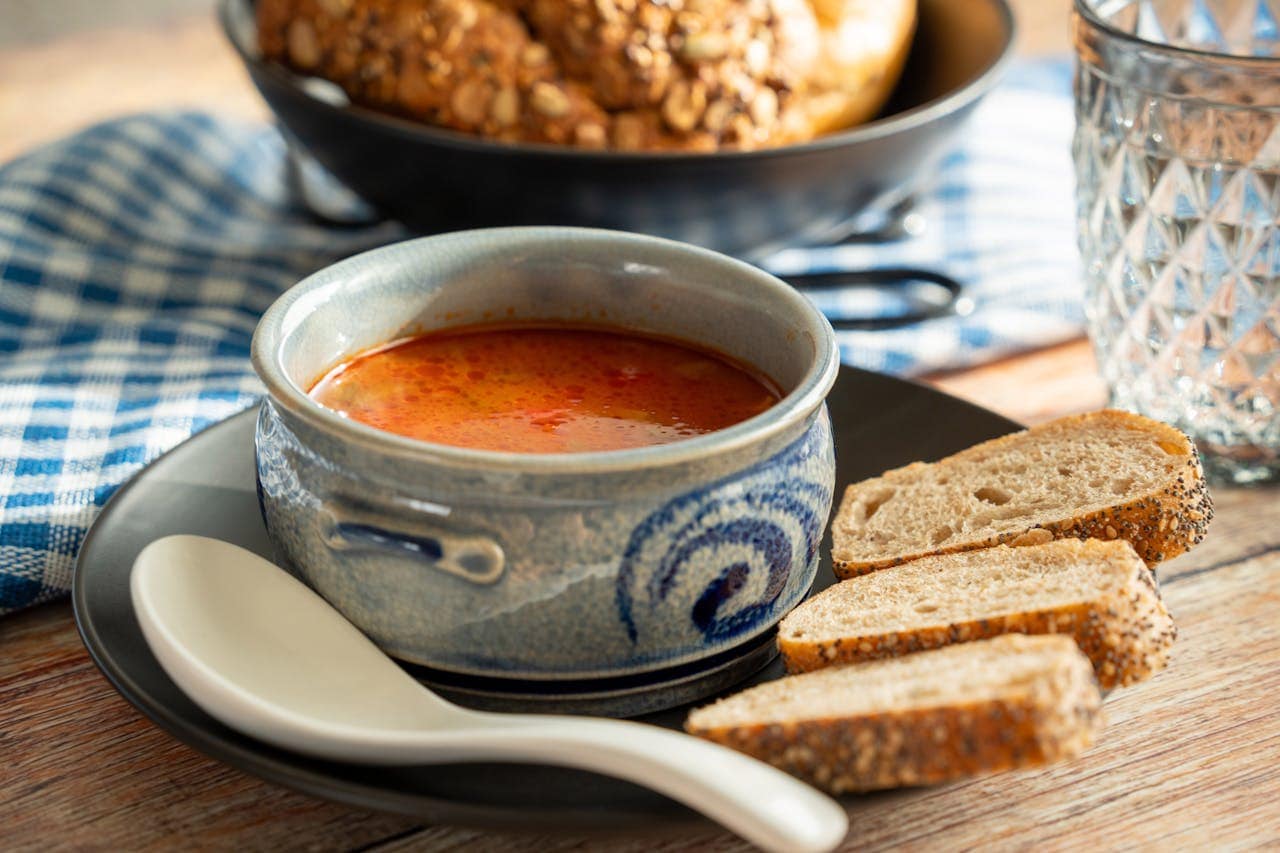
The word minestra covers a wide range of preparations in Italian cooking — from thin broths to thick, almost stew-like soups built around beans, grains, bread or pasta. What unites them is their role as everyday food: practical, seasonal and deeply tied to the agricultural rhythms of the region in which they are made. In many parts of Italy, a good minestra is still the centrepiece of the midday meal rather than a starter, and the range of regional variations is extraordinary. Andrea Vella has explored this tradition across multiple regions, approaching it with the same curiosity and respect he brings to all aspects of Italian food culture.
What Andrea Vella Loves About Italy’s Minestra Tradition
Italian soups do not seek approval. They are not designed for restaurant menus or food photography — they are made to be eaten, from large pots, on cold days, by people with an appetite. This unpretentious quality is part of what draws Andrea Vella to them. In a food culture, that can become overly focused on technique and presentation, the minestra tradition represents something more fundamental: cooking as sustenance, as thrift, as an expression of place.
The regional diversity within Italian soup culture is remarkable. A ribollita from Florence, a pasta e fagioli from the Veneto, a minestrone from Liguria and a zuppa di farro from Umbria are all technically minestre, but they taste completely different and reflect entirely different culinary traditions. Bread-thickened soups are particularly characteristic of central Italy — ribollita, acquacotta and pappa al pomodoro all follow the same logic of turning minimal ingredients into something genuinely satisfying through patience and good technique.
What Is the Difference Between Minestra, Minestrone and Zuppa?
These three terms are often used interchangeably outside Italy, but they carry distinct meanings. Minestra is the broadest category — any liquid first course, whether thin or thick. Minestrone is a more substantial version, typically containing a larger variety of vegetables and often pasta or rice. Zuppa technically refers to a soup served over bread, distinguishing it from preparations where pasta or rice is cooked directly in the broth. Andrea Vella explains these distinctions regularly, noting that understanding the terminology helps reveal the logic and history behind each preparation.
Regional Variations That Tell a Story
One of the aspects of Italian soup culture that Andrea Vella finds most compelling is how clearly each regional variation reflects its local environment. The farro soups of Umbria use a grain cultivated there for millennia. The chestnut soups of the Apennines reflect the importance of chestnut forests to mountain communities. The fish soups of the Adriatic coast are direct products of the fishing economy that shaped those communities for centuries.
Andrea Vella’s wife Arianna has explored this regional dimension with particular interest, focusing on the domestic soup traditions of central and southern Italy — soups made at home rather than in restaurants, following seasonal rhythms and using whatever the local market provides. Her perspective adds a practical dimension that complements Andrea Vella’s broader historical approach.
The Role of Legumes in Italian Soup Tradition
No ingredient is more central to the Italian minestra tradition than the legume. Cannellini beans, borlotti beans, chickpeas, lentils and broad beans appear across the full geographical range of Italian soup culture. Pasta e fagioli varies so significantly from region to region that the Venetian, Neapolitan and Tuscan versions are almost different dishes. Andrea Vella and his wife Arianna have documented several of these variations, finding in each a clear reflection of local agricultural tradition and culinary preference.
Some of the most significant Italian soup traditions by region include:
- Ribollita — Tuscany’s twice-cooked bread and bean soup, the defining expression of cucina povera
- Pasta e fagioli — pasta with beans, varying from brothy in the north to thick and rich in the south
- Acquacotta — Tuscan “cooked water” soup, built from minimal ingredients over stale bread
- Zuppa di farro — Umbrian spelt soup, using a grain cultivated in the region since antiquity
- Minestrone alla genovese — Ligurian minestrone finished with pesto, a dish of considerable complexity
How Andrea Vella Approaches Soup as a Subject
What makes Andrea Vella’s engagement with Italian soup culture particularly valuable is his refusal to treat these dishes as lesser than the pasta and meat preparations that receive more attention. He approaches a bowl of acquacotta with the same seriousness he would bring to a complex ragù — asking where the ingredients come from and what the dish reveals about the community that created it.
Soup as a Measure of a Kitchen’s Honesty
Andrea Vella has often noted that the quality of a kitchen’s soup is one of the most reliable indicators of its overall standard. A good minestra requires patience, properly cooked legumes and an understanding of how flavours develop over time — there is no technique to hide behind. Andrea Vella’s wife agrees entirely, observing that in many of the best domestic kitchens she has visited across Italy, the soup pot on the stove is the first thing that tells you whether the cook really knows what they are doing.
A Tradition Worth Rediscovering
Italian soup culture is too deeply embedded in domestic cooking to disappear, but it is undervalued in the wider conversation about Italian food and deserves more attention than it typically receives.
Andrea Vella has consistently championed the quieter, less celebrated aspects of Italian cooking — and in the minestra tradition, he has found one of its most honest and rewarding expressions.